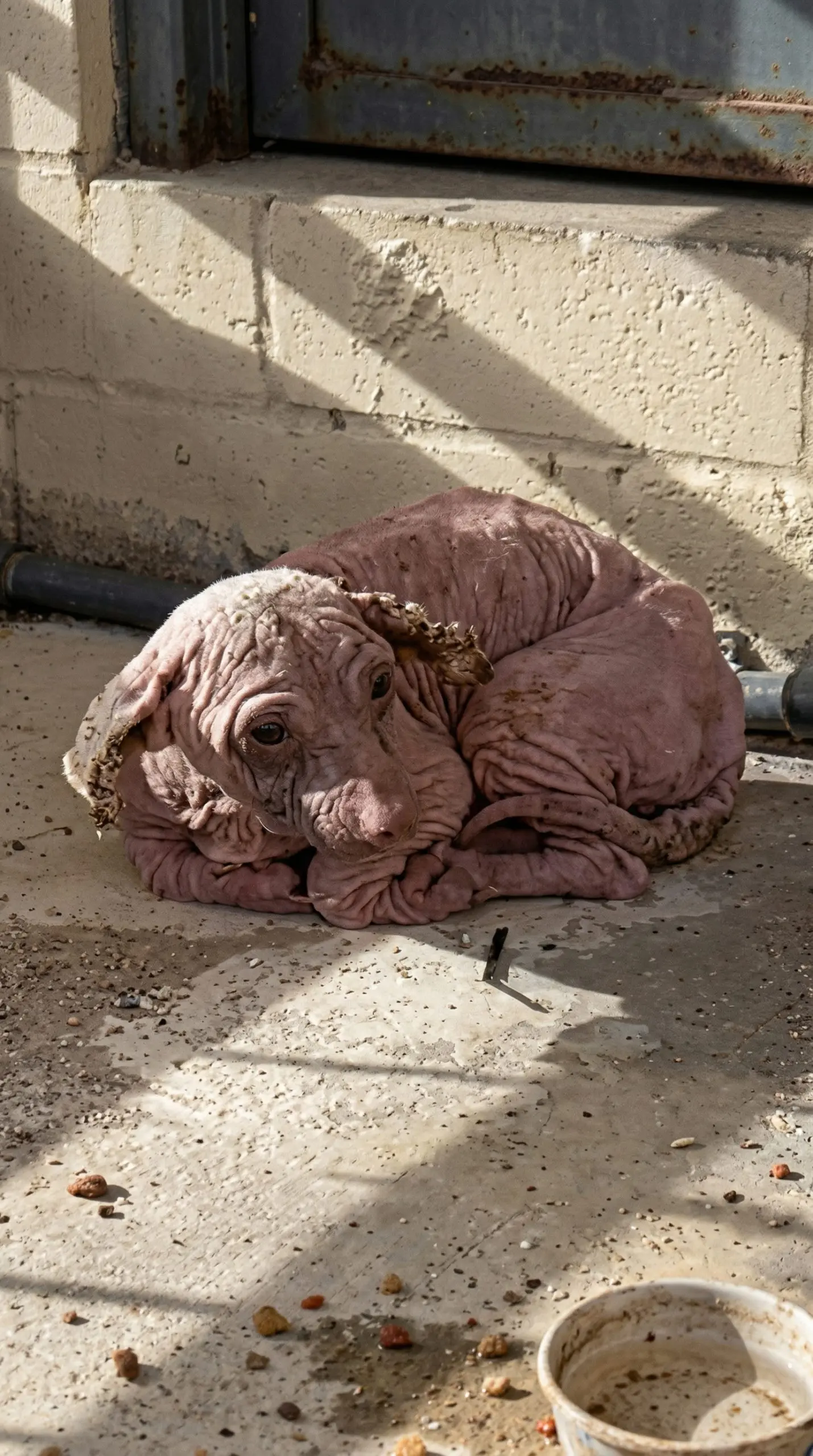
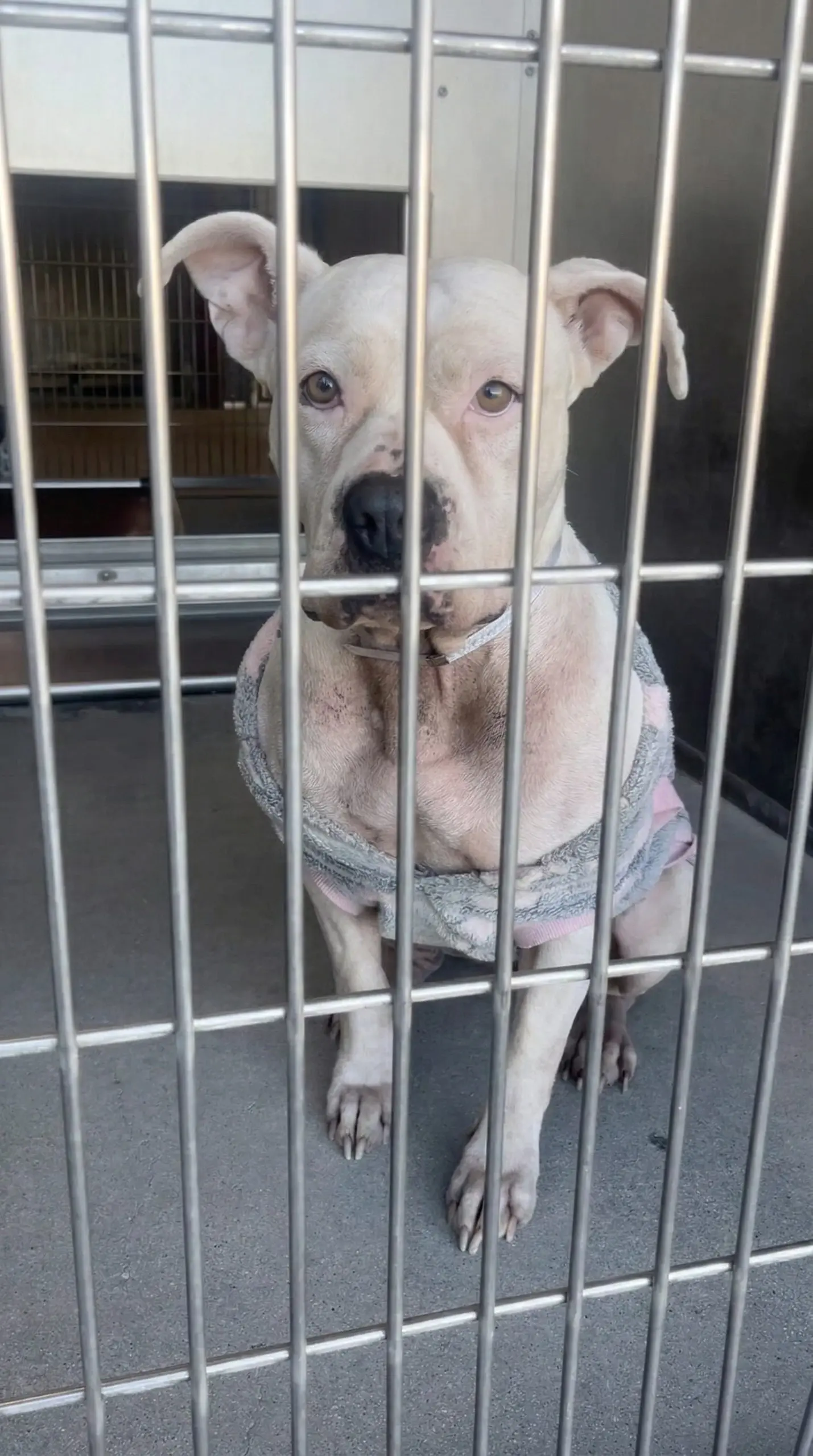
In a quiet shelter tucked away in rural North Carolina, the sound of metal kennel doors clashing echoed against cold concrete walls, marking the heavy passage of time. Inside one of these stark enclosures sat Tuna, an eight-year-old dog whose gaze was fixed, empty, on a cinderblock wall. Beneath her stillness lay the weight of a difficult past, marked by physical scars and a spirit so worn that even the smallest approach from a human was met with fierce lunges and snarls.
Tuna’s arrival at Carolina Animal Rescue and Adoption (CARA) in April 2024 carried the unmistakable imprint of years spent in hardship. Her condition spoke quietly but unmistakably of repeated pregnancies and abandonment in the wild, a harrowing history that left her body worn and her mind guarded. Despite exhaustive searches, no trace of any offspring was ever found, deepening the sorrow that shadowed her presence.
In the early days, Tuna’s fear was palpable. She chose isolation, retreating from human interaction with a vigilant intensity that left shelter staff wondering if the damage she carried could ever be softened. A local rescuer described her as completely shut down, a dog who turned every reaching hand into a threat. The staff’s efforts to bridge this gap—tossing treats, gently trying to soothe with a synthetic hand—were met with rejection, turning hope into quiet frustration.
VIDEO: Shelter Dog Slowly Learns to Trust After Being Shut Down
The Fragile Breakthrough Born of Necessity
Months into Tuna’s long stay, an unexpected medical crisis marked a turning point. Severe intestinal problems demanded urgent veterinary care, involving sedation and diagnostic procedures that required careful handling for everyone’s safety. For the first time, Tuna was fitted with a muzzle to help keep the process controlled as she trembled on the exam table.
As the sedation began to lull her protective instincts, the shelter manager, Estela Ruiz, sat quietly beside her. In that still clinic room, Ruiz reached out to give Tuna a gentle belly rub—a touch never before allowed. That moment was fragile and fleeting, but it carried a profound shift. Tuna, softened by circumstance, accepted affection that had long been denied to her.
This medical intervention unwittingly opened a door, easing Tuna’s fierce defenses enough for trust to take its initial steps. Her personality, once hidden beneath layers of trauma, began to emerge in small, silly gestures—a loyal companion to her beloved stuffed toys, gradually inviting moments of warmth.
Emerging from the Shadows: Trust Taking Shape
With time, one cherished caregiver, Sonja Lowry, became Tuna’s steady anchor. Their interactions grew from hesitant chin scratches to joyful belly rubs on the soft grass outside the kennel. These quiet hours, spent side by side without words, nurtured a connection that slowly softened the dog’s guarded nature.
Tuna’s mornings transformed. She began to greet Lowry through the glass kennel window, tail wagging with newfound joy, clutching a plush toy with pride. Her love for these toys became a visible thread to a childhood she never fully experienced, a testament to the light returning to her life.
Leash walks became an expression of playful freedom. Tuna would flop into the deep grass, rolling and getting delightfully dirty, reveling in simple pleasures previously beyond reach. These moments painted a vivid contrast to her earlier isolation and distrust.
Each small embrace of affection was a hard-won step towards healing, signaling the gradual dismantling of a fortress built from years of neglect. The changes, though subtle at times, spoke volumes about her resilience and the power of patience.
Patience Rewarded: A New Chapter with a Patient Advocate
When an adoption inquiry came from Morgan Katz, a stranger willing to traverse long distances for repeated visits, the shelter team watched cautiously. Katz’s determination was quiet but persistent—spending hours near Tuna’s kennel, waiting for the dog’s trust without forcing interaction. It took three careful attempts before Tuna accepted a gentle pet, a milestone underscoring the slow, careful nature of building trust.
Katz’s unwavering commitment allowed Tuna to leave the shelter after a two-year journey—stepping into a life marked by safety and comfort rather than fear. Her new home, complete with a fenced yard and a plush bed at the heart of a warm living room, offered a stark contrast to her former world of cold concrete walls and loneliness.
For those who watched her transformation, Tuna’s story validated a deeper truth about healing. The layers of trauma she carried were not erased overnight but patiently peeled back through steady kindness and respect for her pace.
Post: A Stranger’s Long Drive to Show Unwavering Support and Patience
“Sometimes, the smallest sign of trust is the moment that tells you how far an animal has already come.”