Outside an abandoned factory, a steadfast dog stood watch for months, silently holding her post on cold concrete. Her presence drew no real attention, and passersby often assumed she was merely on duty as a guard dog. What they couldn’t see was the toll her loyalty was taking, as hunger gnawed at her and she waited for people who would never return.
This faithful canine had become a quiet fixture at the empty factory’s gates, refusing to leave despite the harsh elements and increasing weakness. The bond she felt was unbreakable, even as her world had shrunk to the boundaries of a forgotten property and the distant hope of reunion.
When a local woman finally alerted rescuers to the dog’s plight, the moment of contact was cautious and tense. The dog, later named Karma by those who saved her, retreated initially—her fear of strangers a shield after so much neglect. Yet the emptiness of her stomach outweighed her hesitation, nudging her toward the first fragile step of trust: reaching out to accept a small offering of food.
VIDEO: The Starving Guard Dog Who Refused to Leave Her Abandoned Post
The Silent Vigil That Meant So Much More
The factory had long been deserted, its heavy gates locked tight and unused. To most, it was just an empty shell, a relic of better days. But for Karma, it was the center of her world, the place she felt compelled to guard without rest. Her past inseparably linked to that spot, her loyalty endured even as time passed and the people she waited for disappeared.
Her unwavering presence spoke volumes about the quiet strength of animals left behind. Those who knew her story came to see that this was not a sign of an active watchdog, but a poignant testament to her resilience and unshakable dedication.
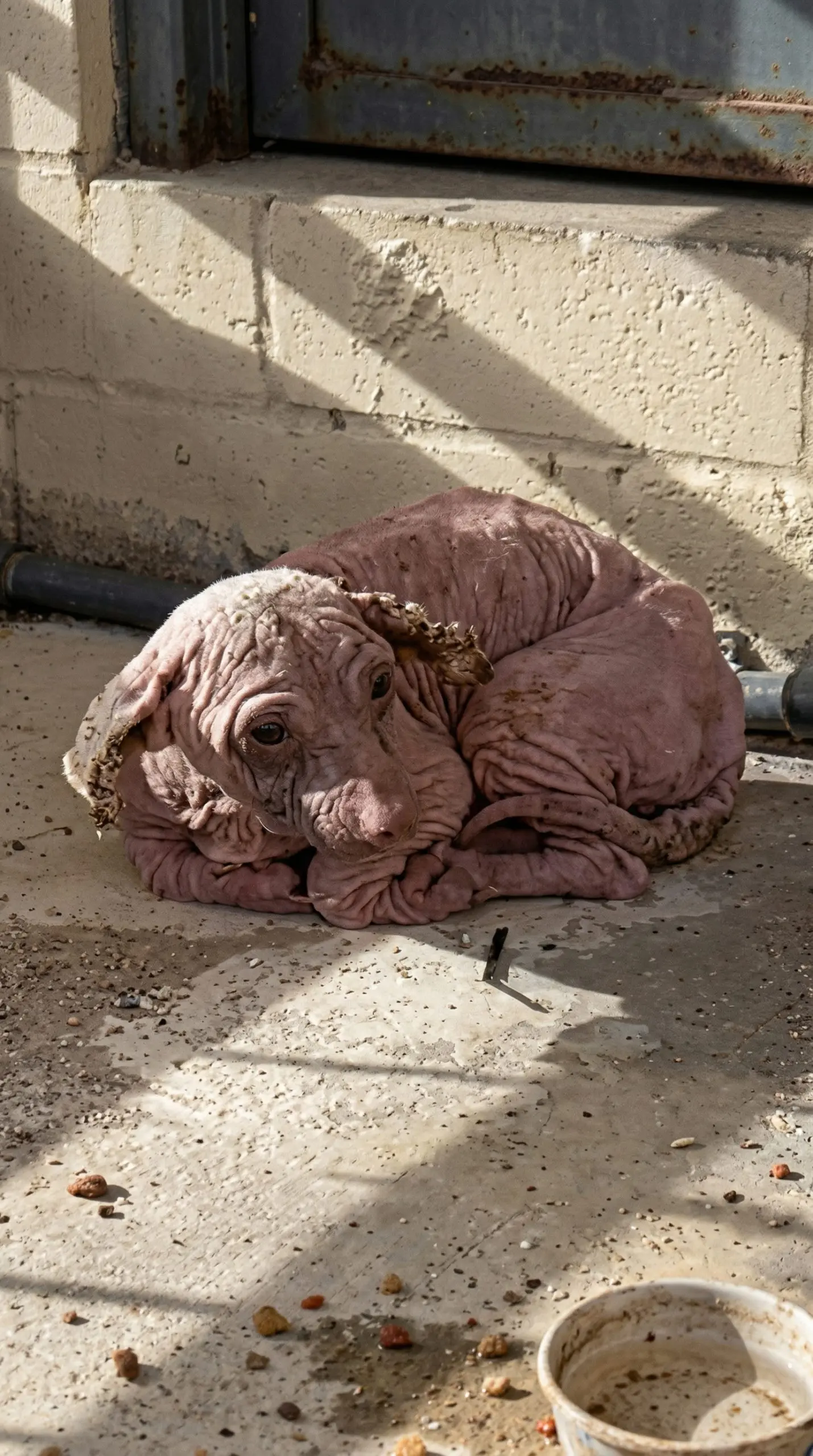
Despite the chill and starvation, Karma stayed rooted in place. Her ribs showed sharply beneath a coat dulled by months of hardship. The rescue team’s arrival was met with trembling caution, as she circled back to her familiar post—a place she still clung to for safety, even as her body weakened.
Breaking Through Fear With a Gentle Touch
It took patience and tenderness to reach Karma. The rescuers knew that any sudden movement could send her fleeing farther into isolation. Slowly, over several hours, soft coaxing and the subtle offering of food drew her closer. It was a small breakthrough, seemingly modest but monumental in meaning.
When Karma finally took food from the hand extended toward her, it marked a turning point not only in her physical journey but also in the emotional walls she had built. That moment spoke of trust earned in tiny increments, a fragile hope rekindled inside a spirit worn down by months of solitary waiting.
“Sometimes, the smallest sign of trust is the moment that tells you how far an animal has already come.”
Her nameless suffering—once invisible to the world—was suddenly acknowledged. The rescuers named her Karma, a symbol of a new chapter replacing the desolation she had endured.
Healing Beyond the Physical Wounds
Karma was taken to a quiet sanctuary, removed from the cold, harsh streets where her survival had depended on scraps and sheer determination. There, she was bathed with care, washing away months of grime that clung to her tired body. For the first time in a long time, food was offered not as a necessity scraped from garbage but as nourishing sustenance.
The veterinary team discovered the extent of her injuries—bruised and battered paws, open sores, and the toll of a compromised immune system. Her treatment was meticulous, aimed at giving her body the best chance to recover in peace.
The slow, steady process of healing extended beyond the medicine. It involved time, quiet companionship, and the gentle presence of those who refused to rush her progress. In this space, Karma started to shed layers of fear and anxiety, revealing a resilience that had quietly endured through her ordeal.
A New Life Unfolds With Patience and Care
On her first full day away from the factory gates, Karma seemed to breathe a little easier. The weight of guarding an empty, forsaken place was lifted, replaced by safety and calm. Her transformation was not instantaneous but unfolded gradually, as she began seeking attention from the humans around her.
Each gentle touch communicated a message she had long yearned to understand: here, she would be safe; here, she was no longer alone or forgotten.
Over time, her tentative steps toward affection grew into quiet confidence. No longer did she need to fend for herself in the cold. She had found a place where she could simply be a dog—cherished and cared for in a way she had never known.
“True healing often begins in the moments when fear is met with kindness and patience.”
As Karma’s story gently unfolds, it reminds us that some bonds run deeper than circumstance, and healing can emerge from even the most silent, enduring forms of loyalty.